Try a product-specific query
ポケモンカード means Pokémon cards, ねんどろいど identifies Nendoroid, and 万年筆 means fountain pen. Add a set, release number or model instead of joining unrelated English and Japanese synonyms.
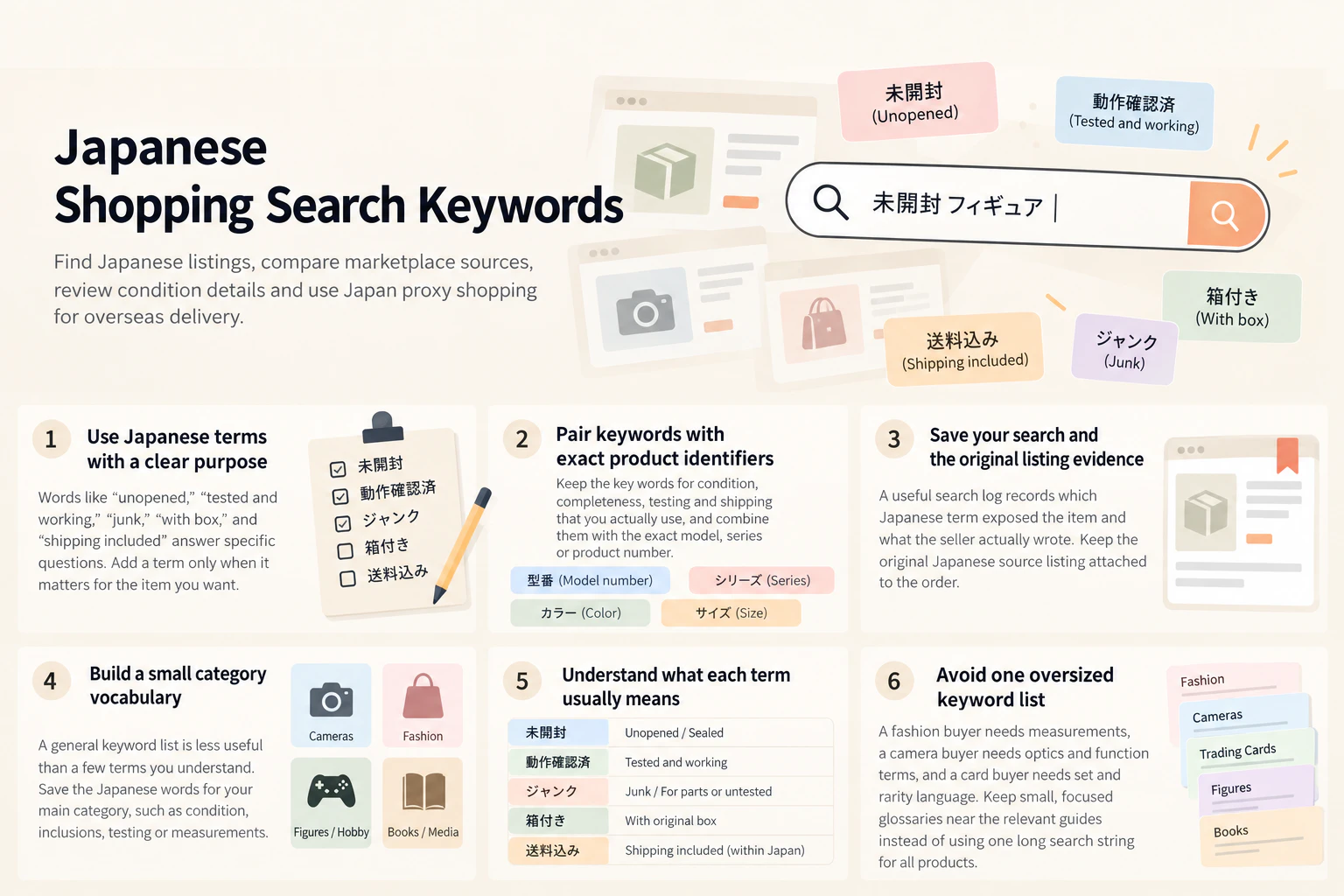
Build a small vocabulary for the category you actually buy
A giant list of Japanese shopping words is less useful than six terms you understand. Save the words for condition, completeness, testing and shipping that recur in your category, then pair them with exact product identifiers. The page should help a buyer interpret search results, not encourage keyword stuffing.
Treat Japanese terms as filters with known meaning
Words such as 未開封, 動作確認済み, ジャンク, 箱あり and 送料込み answer different questions. Add a term only when that question matters to the item; do not stack “good condition” synonyms hoping to improve quality.
Save both the query and the listing evidence
A useful search log records which Japanese term exposed the item and what the seller actually wrote. That prevents a translated search label from being mistaken for a seller guarantee later in the purchase.
Build vocabulary by buying question
Use 未開封 when sealed status matters, 動作確認済み when a seller claims a function check, ジャンク when you intentionally want repair/untested inventory, 箱あり when original packaging matters, and 送料込み when domestic shipping inclusion affects the source comparison. Each word should correspond to a decision you can explain.
Avoid a universal “best Japanese keywords” list
A fashion buyer needs measurements such as 身幅 and 着丈; a camera buyer needs optics/function terms; a card buyer needs set and rarity language. Keep small category glossaries near the relevant guides rather than encouraging one oversized search string across unrelated products.