Break delivery time into four clocks
“How long does Japan shipping take?” hides four different delays: seller dispatch inside Japan, domestic transit to the warehouse, warehouse receiving or consolidation, and the international carrier leg. Track those stages separately so a slow seller is not mistaken for a slow international carrier.
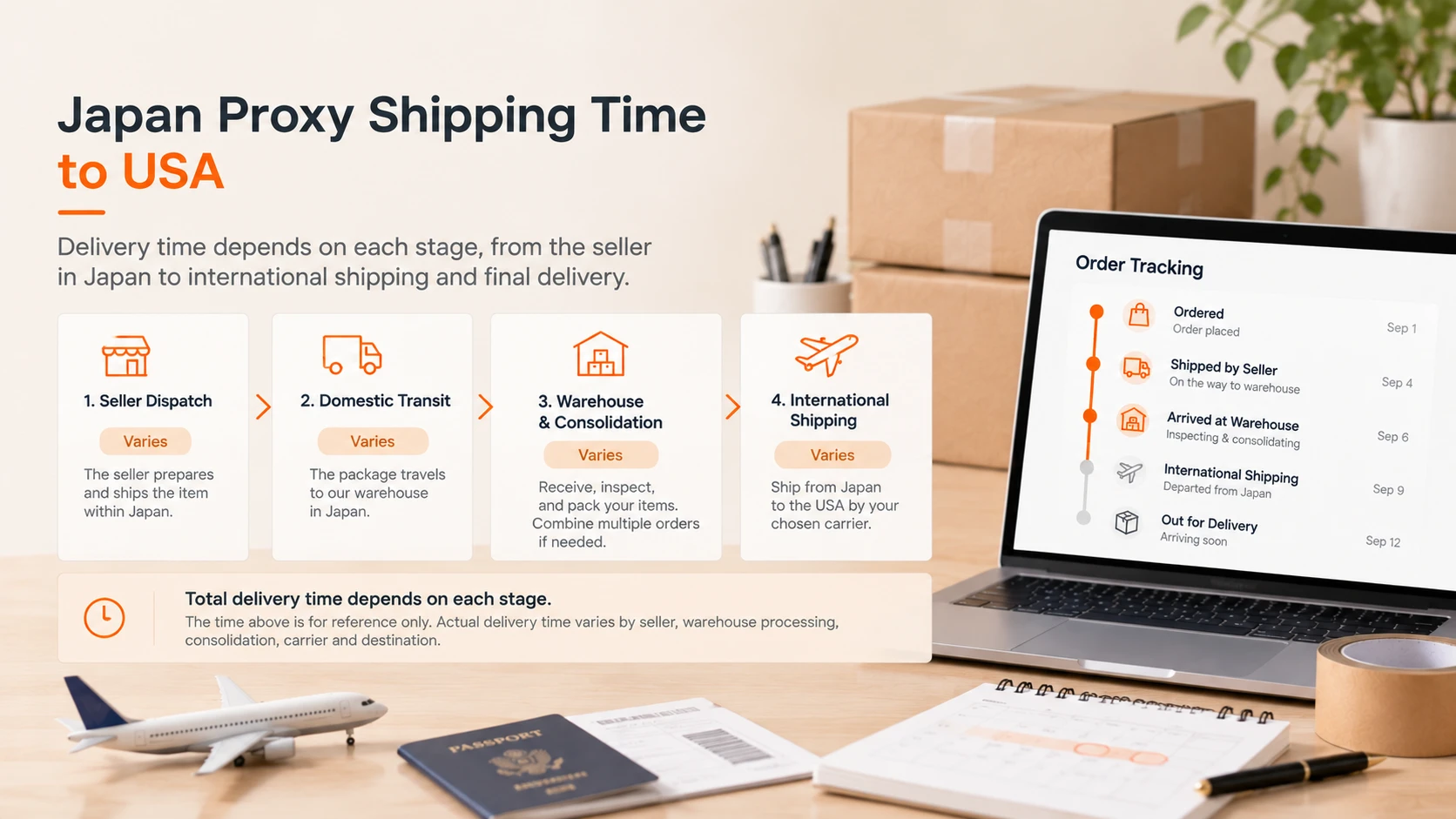
Seller dispatch is often the hidden first delay
A two-day international carrier estimate does not help if the Japanese seller takes a week to ship or a preorder is months away. Show source-store dispatch and domestic tracking separately from warehouse processing and the final carrier transit.
Consolidation adds intentional waiting
A buyer who wants several orders in one parcel may wait for the last domestic package before packing can begin. That delay can be worthwhile, but it should be shown as a consolidation choice rather than attributed to the international carrier.
Check the next action, not a promised delivery date
In your account, distinguish an unpaid request, a seller purchase being processed, a warehouse arrival and a dispatched parcel. Waiting for another order before consolidation is a planning decision, not carrier transit.
For a preorder, count merchant release and fulfillment separately. Do not treat a carrier estimate as a release-date or customs-clearance guarantee.